



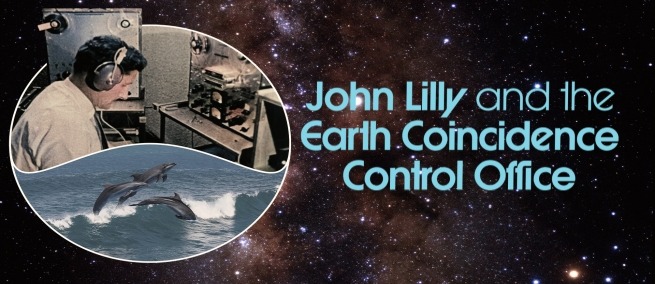
A son of wealthy white parents comes of age in an era of racial apartheid. While making a name for himself testing controversial new technologies on humans and animals, he drives himself nearly insane with LSD and ketamine. He ultimately comes to embody the tensions between society’s loftiest technological aspirations and his deepest pathologies. No, not Elon Musk! I’m talking about the dolphin communication researcher-turned-psychonaut Dr. John Lilly (1915-2001). The titular subject of the 2025 documentary JOHN LILLY AND THE EARTH COINCIDENCE CONTROL OFFICE, Lilly was a renegade 20th-century scientist whose sci-fi-scale ambitions and anti-heroic tendencies resonate with those of some of the early 21st-century’s more controversial tech oligarchs.
I’m a researcher and teacher in the interdisciplinary field of Science and Technology Studies (STS): a kind of social scientist who studies scientists. I track how distinctions between scientific and non-scientific (e.g., mythological, religious, artistic, pseudoscientific) forms of knowledge are drawn and re-drawn over the course of history and across different social contexts. Doing so shows us that scientific knowledge and technological innovation don’t just change society, but are also deeply shaped by the cultures from which they are produced.
In studying how scientific knowledge is socially produced, contested, and, eventually, displaced, it is useful to look carefully at how scientific controversies unfold. John Lilly was practically a one-man scientific controversy, whose complex legacy is the topic of an exciting forthcoming edited volume by historians Hannah Zeavin and Jeffrey Mathias. Directors Courtney Stephens and Michael Almereyda took up the daunting task of condensing Lilly’s bizarre six-decade career into an 89 minute film. They succeed in weaving together multiple narrative threads, one of the most interesting of which is Lilly’s professional journey within and, eventually, well beyond the social and ideological boundaries of the scientific mainstream.
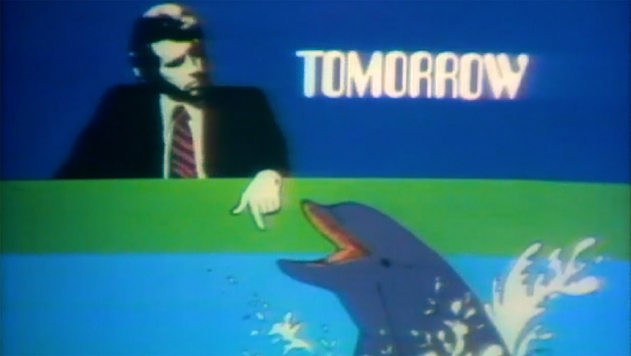
Introduced by narrator Chloë Sevigny as a “straight-arrow, sober military scientist and family man,” Lilly the 1940s military physiologist became increasingly “weird” (a term Lilly embraced and which the film interestingly connects etymologically to the concept of “fate”) as he turned increasingly to the notoriously “hard” problem of consciousness. His most famous invention, the isolation tank, was meant as a way to experimentally cancel-out the variable of embodied sensation by suspending a human research subject in darkness and body-temperature salt water. His subsequent work on cetaceans began in 1957, when he gained access to captive bottlenose dolphins held at Miami’s Marine Studios.
As an American scientist with military connections in the era of MK-Ultra (the CIA’s wildly illegal and deeply unethical “brain washing” program), Lilly had early access to LSD. He initially avoided using the hallucinogen, hoping to maintain a “baseline” of normal perception from which he could conduct his experiments. This cognitive asceticism went out the window around 1960, when Lilly’s relationship with the producer of the film and TV series Flipper (or, maybe more significantly, the producer’s wife) opened a “portal” to what would become decades of psychedelic experimentation.
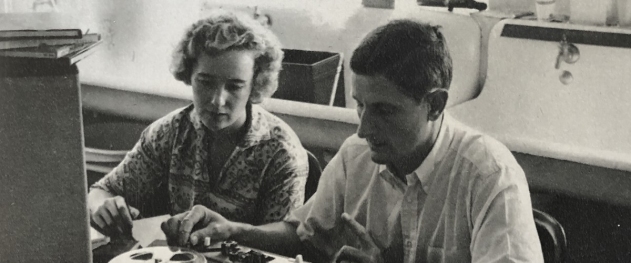
With the support of federal government agencies (including NASA) and his own personal inheritance, Lilly partially flooded a seaside house in the Caribbean in order to make it suitable for human-dolphin cohabitation. Things turned ugly at this “Dolphinarium,” however, with Lilly dosing the dolphins with LSD and other drugs. Lilly’s former colleague Scott McVay recounts in the film how, by 1964, Lilly was usually away and the dolphins had become neurotic from their cramped quarters. What time he did spend there was increasingly spent in the isolation tank. Mathematician Hella McVay describes how Lilly’s behavior became impatient and frustrating to other scientists. “The lab became phony,” she recounts, “it became not scientific anymore.”
We learn that, by around 1967, Lilly was “no longer contributing to scientific journals and his reputation among mainstream scientists had plummeted.” Lilly attributed the eventual deaths of five of his eight dolphins to suicide. He divorced his second wife, lost his government grants, and his dolphin lab was dismantled. Following a move to Topeka, he eventually wound up at California’s ESALEN Institute. Lilly continued calling himself a scientist, the narrator relates, “though his use of the term bec[ame] increasingly slippery.” Deprived of dolphins, Lilly focused on the drugs. He then became aware of an ongoing universal battle between an extraterrestrial “Earth Coincidence Control Office” and “Solid State Intelligence,” a sinister entity born of human efforts at technological mastery.
The film then takes a break from Lilly’s decade spent in the psychedelic wilderness. It examines such Lilly-inspired films as THE DAY OF THE DOLPHIN (1973) and ALTERED STATES (1980). It also draws plausible, if somewhat broad connections with the “Save the Whales” movement and other examples of people’s growing consciousness of cetaceans (and, specifically, of cetacean consciousness.) I won’t spoil the ending, except to say that Lilly eventually resurfaces and that, in one memorable interview, he is wearing a coonskin cap and a single black latex glove.
Enabled as it was by defense spending and his own personal fortune, Lilly’s reckless (and, on occasion, actively harmful) technoscientific career may feel somewhat familiar to those of us acquainted with such controversial techno-scientific brands as Palantir, Flock, Neuralink, Cluely, or Theranos. But Lilly’s story also recapitulates earlier scientific controversies in interesting and unexpected ways: His theory of ECCO, the cosmic agency which engineers synchronistic events, is itself an echo of two earlier examples of famous scientists with deep and controversial interests in the scientific study of coincidences.
Paul Kammerer (1880-1926), an Austrian biologist whose work on inheritance of acquired traits was (until recently) considered heretical and possibly fraudulent, wrote extensively about the phenomenon of the “series” (Serie in German), which “manifests itself as a lawful recurrence of the same or similar things and events–a recurrence, or clustering, in time or space whereby the individual members in the sequence–as far as can be ascertained by careful analysis–are not connected by the same active cause” (Kammerer cited in Koestler, 136). In collaboration with psychologist Carl Jung (1875-1961), the theoretical physicist and Nobel laureate Wolfgang Pauli (1900-1958) drew on Kammerer’s work to coin the term “synchronicity” to describe an “a-causal connecting principle.” Whereas Kammerer’s laws of seriality were modeled on analogy with physical principles like the law of gravitation, rejecting parapsychological explanations as superstitions, Jung and Pauli left room for things like the collective unconscious and even extra-sensory perception.
Tellingly, Lilly framed the phenomenon of coincidence as a sort of bureaucratic Cold War scenario between the forces of disembodied liberal serendipity and autocratically deterministic technology. While it’s unclear whether Lilly was aware of this previous work by Kammerer, Pauli, and Jung, it is interesting to read him in this lineage of eminent scientists whose more “out-there” later work put their reputation at risk. Just as the recent de-stigmatization of epigenetics research has led to a rehabilitation of Kammerer, we might view the renewed historiographic and cinematic interest in Lilly in light of the commercialization of psychedelic therapy and the rise of the “disrupter” class. Had he been born 60 years later, Lilly would have likely become a tech billionaire.
♦
FILMMAKERS
PARTNERS
TOPICS
SHARE