



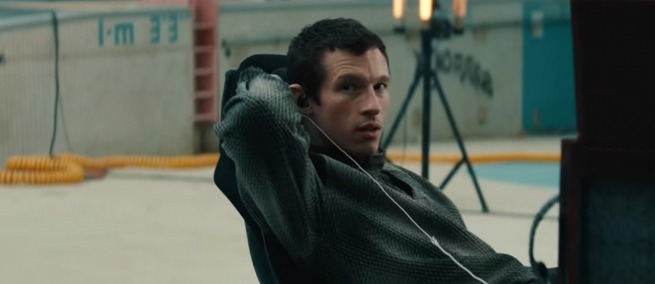
Neuromancer, published in 1984, is the first of William Gibson’s novels and has been labelled the first science fiction book of the genre “cyberpunk.” The book follows Case, a one-time hustler, computer wizard, and petty thief who stole from his employer and was chemically changed so he would no longer be able to ply what had been his tradecraft.
For a book written more than forty years ago, there are many parts of the story that foreshadow what we now see present or on the horizon: the ability to “jack in” to and traverse the cyber world from one’s brain, using hardware implanted in the body; the ability to communicate with others through the brain’s connection into cyberspace; and the use of chemicals to alter personality or personal capability. Indeed, only part of the book deals with the characters in physical space; much of what goes on involves the characters interacting with each other in the virtual world that is cyberspace. This can be seen early on: Case, having been caught stealing from his employers, has had his nervous system damaged by them.
“The damage was minute, subtle, and utterly effective.
For Case, who’d lived for the bodiless exultation of cyberspace, it was the Fall. In the bars he’d frequented as a cowboy hotshot, the elite stance involved a certain relaxed contempt for the flesh. The body was meat. Case fell into the prison of his own flesh.”
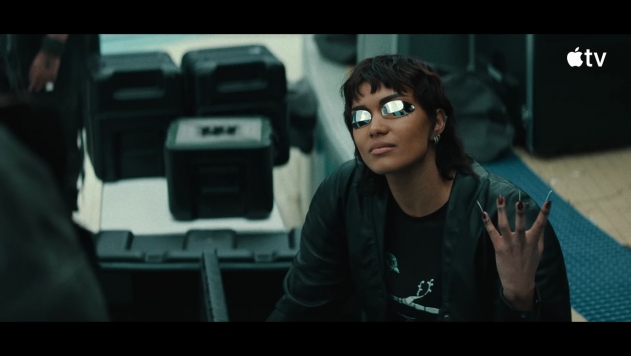
This is all worth revisiting now that the book is being adapted into a television series that will be released on Apple TV in early 2027. The overall plot of the novel is less interesting (at least to this reader) than the ongoing nuances of the biology and the biological changes induces by what was then quite radical but is now medically perhaps only on the horizon. The story begins in Chiba, a city west of Tokyo that is the purported headquarters of the world’s body-altering centers. From there we are introduced to Molly, whose major alteration has been the inclusion of razors at the ends of her fingers that can be extruded or not at will. The story progresses around the world, and into space, where a colony of Rastafarians lives in a different colony from Freeside, a habitat in space that is a pleasure retreat for those with money and is the home of the Tessier-Ashpool family.
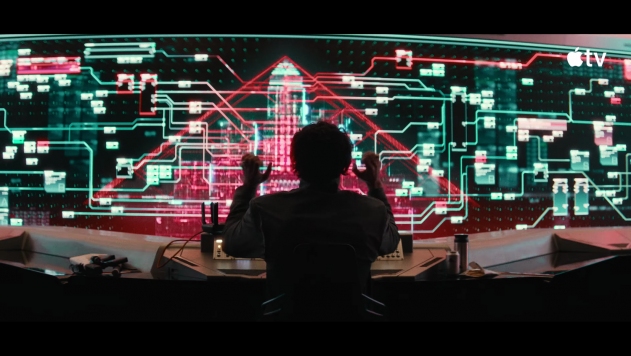
Throughout the book, the characters change and change names, with some characters being real humans and some being just AI, and it isn’t always clear which is which or which is just some “person” that Case sees either in reality or in cyberspace. This makes the book harder to read, because there is more context that must be maintained in order to understand what’s going on. But this is also key to the whole question of “what’s going on?” If that which is “real” is both real (in the normal sense) and also virtual (in cyberspace in interaction with artificial intelligences), then half the battle of understanding what’s going on is understanding what is actually real and what is virtual.
We humans are not quite “there” yet, but it is possible, with the recent achievements in artificial intelligence, that we are a lot closer to the world of Neuromancer than we might like to admit. We don’t yet have computers or computer connections implanted in our bodies, but we are getting closer; almost every week one can read about such things. Most recently there has been reporting of the ability to detect a brain’s desire for physical actions; this would be invaluable in assisting those who are physically disabled.
This reviewer has seen two AI bubbles in his career, both of which have burst. The newest AI bubble may very well burst sometime soon. This reviewer has frequently said that there is no discipline with a greater hype-to-substance ratio than computing, and the current hype of AI is exemplary in that regard. One tests software in controlled environments; the recent escapes by AI from the “controlled” environment, that led to attacks on other software systems, simply reinforces the concern that should be raised about whether the developers are really in control of what they are developing. And given that the goal in software is not to produce a quality product, but rather to produce a mostly-workable product six months ahead of the competition, it is unlikely that we will see AI that is secure against attack or doesn’t have bugs.
I will not try to summarize the plot, or to tell readers what to expect from the last half of the book. Case, the main character, is whisked from one place to another, including off-world into (at least two?) different locations. All through this there is the chasing-down of the different persons/entities, and the concomitant problems of who those entities are, whether they are physical or just programs, to whom they report, and such. All in all, part of the entire story line is the question of whom one can trust when one can’t even be sure whom it is that one is working/talking/corresponding with. This pervades the novel.
And all of this is foreshadowing of what we are now experiencing. We don’t know that who we “talk” with is a person or an AI. We have reports of AI bots going off script and attacking other sites. We have premonitions from the AI wizards that their own AI will kill off humanity in the next half-dozen years.
The book, and presumably the television version, depicts all this (although one might suspect the TV version to be heavy on the images and light on the nuances). We really are entering a new world, in which AI that is no longer under our actual control can dictate or manage actual physical actions (a current issue is about AI drones that can execute people without needing human confirmations).
With all the current hyperbole and controversy about AI, seeing this forty-year-old novel brought to the screen permits a broader discussion of what we as citizens really want to see in the computer programs that manage our lives. Five years ago, this novel might well have been seen as science fiction. Today, it is much more a cautionary tale about what the world could look like if we don’t manage the AI that we know is on the way.
♦
TOPICS
SHARE