



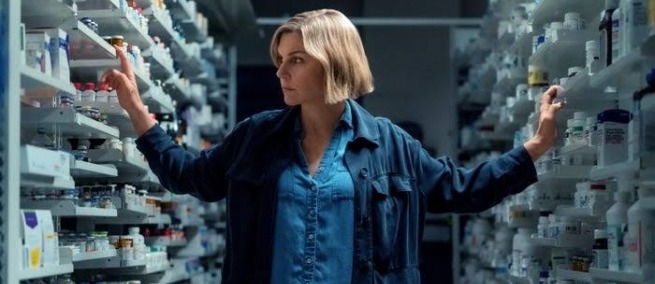
PLURIBUS is a science fiction television series created by Vince Gilligan for Apple TV. The first season has 9 episodes, and a second season has been ordered. There's probably no other television writer with a resume as impressive as Vince Gilligan (BREAKING BAD, BETTER CALL SAUL). I worked with him as a science advisor on BREAKING BAD, starting with season 2. I don’t believe he had a science advisor for PLURIBUS, but I know how he works, enough to be able to say the following. He loves science, and he is a true genius, so he can read science content and understand it -- mostly. He has no science degree, so his capabilities as a nonscientist are amazing. I don’t know that he really needs an advisor, except for technical terms, reagents, chemical structures, pronunciation, etc.
There are some criticisms of PLURIBUS’s science found online, reminiscent of BREAKING BAD when it was starting. These shows are dramas – fiction, they are not documentaries. People may expect to have perfect science in these shows, but actually the science only needs to be sufficiently accurate to keep viewers immersed. It will need plot devices and hooks which might not exist using purely accurate science. Vince knows what he’s doing and when he fudges a bit, it’s intentional.
In PLURIBUS, Rhea Seehorn plays the lead, Carol Sturka, a novelist who finds herself isolated after an alien virus transforms the rest of humanity into a peaceful and content hive mind, which seeks to assimilate her and other immune individuals. Referring to Carol, the show's log line is: “the most miserable person on earth must save the world from happiness.”

Once again, Vince Gilligan creates in the viewers strong emotions in response to discomfort created by activities of the shows’ protagonist. In PLURIBUS, the discomfort comes from the intentionally slow pace and seemingly unnecessary repetition. The qualities are introduced and developed as the show progresses. In both qualities, the sources of discomfort are designed to elicit the emotional response of frustration in the audience.
This technique of generating emotion in the audience, in order to keep them interested, parallels the similarly designed slow progression of Jimmy McGill’s work as an attorney from questionable to unethical to illegal activities, ultimately resulting in creation of the egocentric, sleazy, corrupt Saul Goodman in the TV series BETTER CALL SAUL. Watching this deterioration in ethics and appearance over a long period of time again creates in viewers an emotional response to the show, again discomfort, which eventually alienates the audience.
In BREAKING BAD, the discomfort progression is apparent in high school chemistry teacher Walter White, as he slowly morphs from humane and sympathetic to loathsome. I recall Vince telling me that he was going to make Walter White worsen gradually, in a way such that the audience would gradually be annoyed with and alienated from him. Furthermore, he said it was his goal to make Walter White such a despicable person in the end that everyone hated him. Vince succeeded.
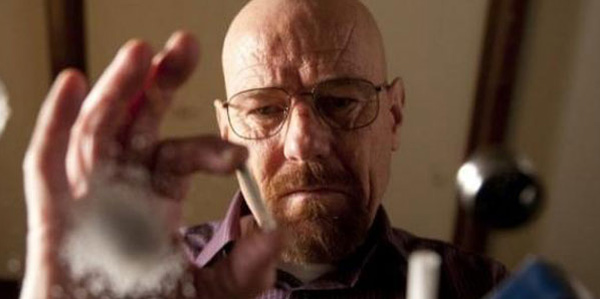
The discomfort mentioned above makes the audience unable to look away, so they stay engaged and continue watching. This is part of what makes the show so appealing, almost addictive. A final point is that Vince Gilligan creates these strong emotions in us in ways which are so subtle that we don’t realize it is happening.
Other than the discomfort, PLURIBUS doesn't have a clear hook. And the show doesn't have a well-defined antagonist beyond the rather abstract collective consciousness, which viewers learn about as the series progresses. In PLURIBUS, an alien virus enables the centralized communication of all except 13 individuals on earth via brain-to-brain telepathy, accomplishing the "Joining" to form "Others." The closest examples of this in nature are bees, ants, or termites, but these communicate via pheromones and/or physical signals, rather than telepathy. Therefore, this series is truly creative and not merely copying nature. The telepathic communication of individuals to form a hive mind has been used in film previously, but in those, the collective is ruthless and violent, compared to the “Others” who are more benign and harmonious so that the members experience happiness and cooperation.
My science advising is usually for science disaster films. However, regardless of the type of film, I consider the most important step to be to align my goals with those of the producer, director, actors, crew, and anyone else who wants my expertise. For example, in a drama, such as BREAKING BAD, scientific accuracy is not always universally desired. During a set visit, I recall Vince asking me, “What do you think about making the meth blue?” I told him, “I wouldn’t do it.” He asked why, and I replied, “Because meth is white.” He asked, “What if it is really pure?” I said, “Then it will be really white.” He asked, “What if it is really, really pure?” I replied, “Then it will be really, really white.” Nevertheless, he made the meth blue. I understood; I didn’t feel slighted that he didn’t follow my advice. He needed a plot device. Hence, we must always keep in mind the goals of the experts who are making the film.
Other considerations are timing; advisors must deliver on time. And when a request came through late at night, I still tried to have the answer by the next day. Also, I recall someone on the set telling me that not all shows want a science advisor because they can be too constricting – “You can’t do this, you can’t do that, you can’t do this, etc.” We can’t get in the way of creativity. For me, the experience is always a lot of fun, and I learn a lot.
TOPICS
SHARE