


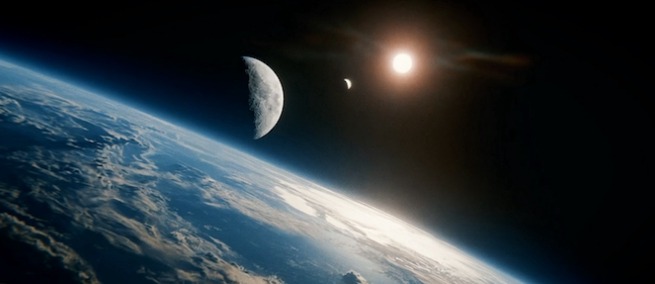
In 1716, the astronomer Edmond Halley wrote instructions for an event he knew he would never live to see: a rare transit of Venus. He understood that if future astronomers observed Venus crossing the face of the Sun from different points on Earth, and timed it precisely, they could help calculate the distance between the Earth and the Sun - and from there, the scale of the Solar System itself. So he told future generations where to stand, when to look, and what to record. Forty-five years later, strangers who had never met him carried out his request.
That structure captivated me: one person sending an idea into the future, trusting others to carry it forward.
As an independent filmmaker, I collect historical fragments, waiting for the right moment to translate them to the screen. About a month before June 6, 2026, I realized the date would mark exactly 265 years since the 1761 transit of Venus. The story had been in my notes for years. Suddenly, the anniversary was not a decade away - it was now. My collaborators Tamir Avidor, Joseph “Seffy” Hirsch, and I decided to make a film.
TRANSITis a two-minute cinematic short made with contemporary AI image and video tools. It was a passion project by a small group of AI enthusiasts, but also by filmmakers who love history, science, and forgotten stories. At first, I thought we were making a film about astronomy. Then I thought we were making a film about AI. Eventually, I realized it was about prediction, collaboration, and the human ability to imagine a future we may never personally see.
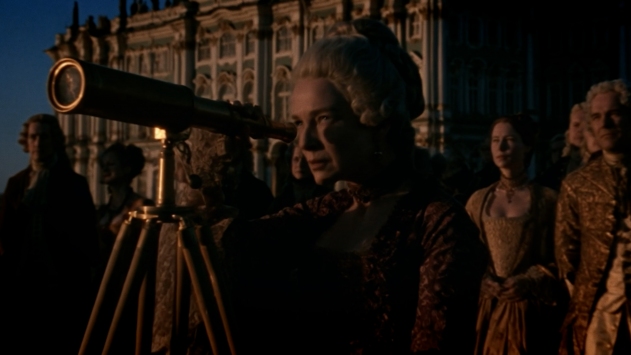
On June 6, 1761, astronomers in many parts of the world looked toward the Sun, searching for a small black dot: Venus crossing its face. By timing the transit from different locations, they hoped to measure solar parallax and calculate the scale of the Solar System. The effort became one of the most ambitious scientific collaborations of the eighteenth century, unfolding in the middle of the Seven Years’ War.
The war did not stop for the transit. That would be too clean, and history is rarely that clean. Not every expedition was spared its dangers. But in some cases, warring powers granted safe passage or cooperation to astronomers so they could observe and contribute to a shared scientific measurement. For a brief moment, science was allowed to pass through conflict.
Because TRANSITis only two minutes long, we had to compress complex history into a cinematic impression. That meant making choices, omissions, and creative liberties. Some telescopes in the film are more imagined than strictly historical. We wanted the film to feel visually alive, not like a diagram. We did not foreground the smoked glass or solar viewing methods astronomers would have needed to protect their eyes. We also left out the clocks and watches essential to timing the transit, the clouded observations that complicated the data, and the fact that the measurement was refined through the following transit of Venus in 1769. Our goal was an entry point, not a complete educational documentary.
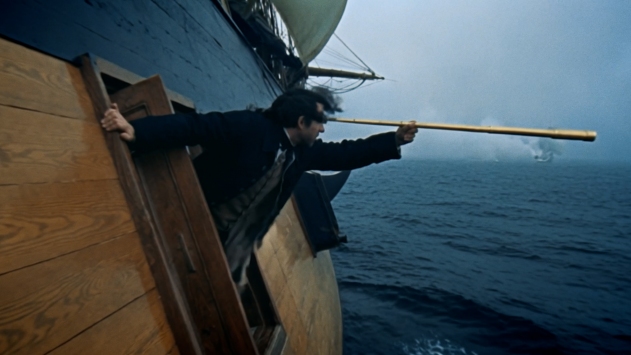
Working from historical maps, illustrations, ship plans, scientific diagrams, and period references, we used tools including Midjourney, Grok, Kling, ChatGPT, and Seedance to visualize a past that was never photographed. The challenge was never simply generating beautiful images. It was deciding what the image should be.
AI did not remove the need for human judgment - it intensified it. Every output demanded a decision balancing historical plausibility, cinematic rhythm, and emotional truth. We constantly encountered the technology’s limits: images that looked convincing at first glance became strange or inaccurate when examined closely, and historical details were invented with complete confidence. The work became less about asking the machine to create something and more about directing a conversation between research, imagination, and correction.
That felt appropriate. Halley used mathematical models to predict an event he would never witness. Nearly three centuries later, we used predictive AI models to reconstruct an event that was never filmed. In both cases, models were used to imagine something humans could not directly see.
These tools allowed a small team to attempt a project that would normally require immense scale: ships, observatories, period costumes, visual effects, locations, and travel. But the process still depended entirely on human structure: research, writing, shot design, editing, rhythm, sound design, and the crucial decision of what to leave out.
By the end, what moved me most was not only the astronomy or the technology. It was that rare moment in 1761 when rivals agreed something was more important than their conflict. In 1761, that shared goal was the distance to the Sun. In 2026, with monumental challenges like climate, public health, science, education, and AI, it sometimes feels harder to name our shared project.
That may be why a 265-year-old story felt suddenly contemporary.
The next transit of Venus will not occur until December 10th, 2117. Almost none of us alive today will be here to witness it. Like Halley, we are leaving behind a record of our time, and of the choices we made, for whoever looks up at the Sun next.
The film ends with one line: “What are we refusing to do together?”
If people could cooperate to measure the universe during a war, what are we refusing to do together now? And perhaps the more urgent question is: what happens if we keep refusing?
Created and directed by Nim Shapira, Tamir Avidor, and Seffy Hirsch. Concept, writing, and creative direction by Nim Shapira. AI image and video generation by Seffy Hirsch, Nim Shapira, and Tamir Avidor. Original music by Floris De Haan / Stardust Audio. Sound design by RafiChen.
♦
TOPICS
SHARE